
From the handlooms of eastern Nepal to the runways of Biratnagar — Dhaka is more than a fabric, it is an identity.
What Is Dhaka Fabric?
Dhaka — originally called Thaka — is Nepal's most iconic handwoven textile, instantly recognizable by its geometric patterns, vibrant colors, and rhythmic symmetry. But Dhaka is not one story. It is two, rooted in different soils, shaped by different hands, and carrying different cultural souls. The twin hearts of Nepali Dhaka are Terhathum in the east and Palpa in the west, and together they define what this fabric means to the nation.
Terhathum Dhaka — The Original Weave
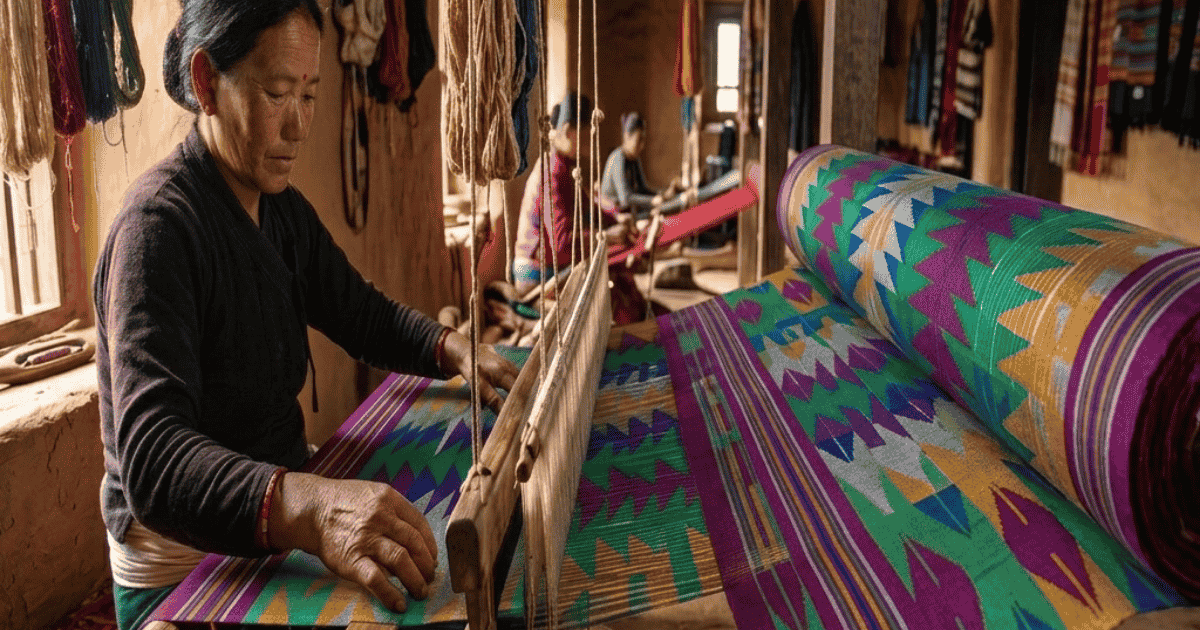
The oldest and most indigenous form of Dhaka traces its roots to the Limbu people of Terhathum district in eastern Nepal. According to the Asia InCH Encyclopedia of Intangible Cultural Heritage, the main centre of Dhaka weaving has been known for generations in Terhathum, though the art was formerly applied mainly to the ends of sashes and waistbands rather than topis.
Today, some of the finest Dhaka cloth is woven by Limbu women from eastern Nepal, with Rai women also playing a significant role — and the majority of weavers are women.
"Today some of the finest Dhaka cloth is woven by Limbu women from eastern Nepal... no two topis or shawls are identical: each has its own individual pattern, reflecting the creativity and skill of the weaver."
For the Limbus, Dhaka weaving was more than a profession — it was an intimate domestic art. Every woman was expected to know how to weave, and every household possessed a loom. The intricate patterns of the cloth were reflective of tribal beliefs, ancestral wisdom, and environmental symbolism. Natural dyes were traditionally extracted from bark, leaves, and berries to achieve shades of red, blue, black, and ochre.
Palpali Dhaka — The Western Heritage
While Terhathum holds the oldest roots, Palpa district in western Nepal became the face of Dhaka for much of modern Nepal — and the story of its rise is remarkable. The modern chapter of Palpali Dhaka begins with one man: Ganesh Man Maharjan.
In 1958, Maharjan returned to Palpa after working in a Jamdani factory in India, where he had been inspired by Chamua Dhaka. He trained local weavers and began producing the fabric himself. By 1967, his product caught on as Palpali Dhaka — the attractively coloured, beautifully patterned fabric that would come to symbolize Nepal itself.
The fabric's glory days arrived during the reign of King Mahendra, when the Dhaka topi was declared Nepal's national cap — made mandatory for official photographs including passports and government documents. Today, Palpa is widely recognized as the capital of Dhaka textile art in Nepal.
Terhathum vs. Palpali Dhaka: A Comparison
| Feature | Terhathum Dhaka | Palpali Dhaka |
|---|---|---|
| Origin | Indigenous Limbu community, Eastern Nepal | Palpa district, Western Nepal |
| Loom Type | Backstrap loom (haate taan) | Frame loom; Jacquard looms for scale |
| Pattern Style | Bold tribal motifs — flora, fauna, ancestral symbolism | Refined geometric patterns; commercially standardized |
| Color Palette | Rich, deeply saturated earthy tones | Bright, vibrant; later pastel for urban/global markets |
| Transmission | Oral — mother to daughter | Formal training centers & cooperatives |
In short: Terhathum gave Dhaka its soul; Palpa gave it its scale.
Traditional and Cultural Significance
For the Limbu community, Dhaka is not merely decorative — it is cultural identity woven into thread. A Limbu man traditionally wears a Dhaka topi and scarf, while a Limbu woman dresses in a Dhaka mekhli, shawl, and sari. These garments mark ceremonies, rites of passage, festivals, and everyday cultural pride.
Beyond the Limbu community, Dhaka has become a broader symbol of Nepali national identity. Women across Nepal wear Dhaka sarees and cholis for Dashain, Tihar, Teej, and wedding seasons. In bridal culture, many brides incorporate Dhaka into their wedding attire as a conscious choice — a way of linking themselves to their roots on one of life's most significant days.
The Current Situation: Struggle and Revival
Dhaka's modern story is one of near-loss and hard-won recovery. The industry was devastated by the civil war (1996–2006), but is now finding its way back. The Palpali Dhaka Association (PDA), established in 2019, has been a catalyst for renewal, partnering with programs like UKaid's Skills for Employment Programme.
On the fashion side, a wave of Nepali designers are embracing the fabric out of genuine creative conviction. Dhaka's revival is being driven equally by innovation and cultural conscience.
Dhaka Fusion: Where Heritage Meets Modernity
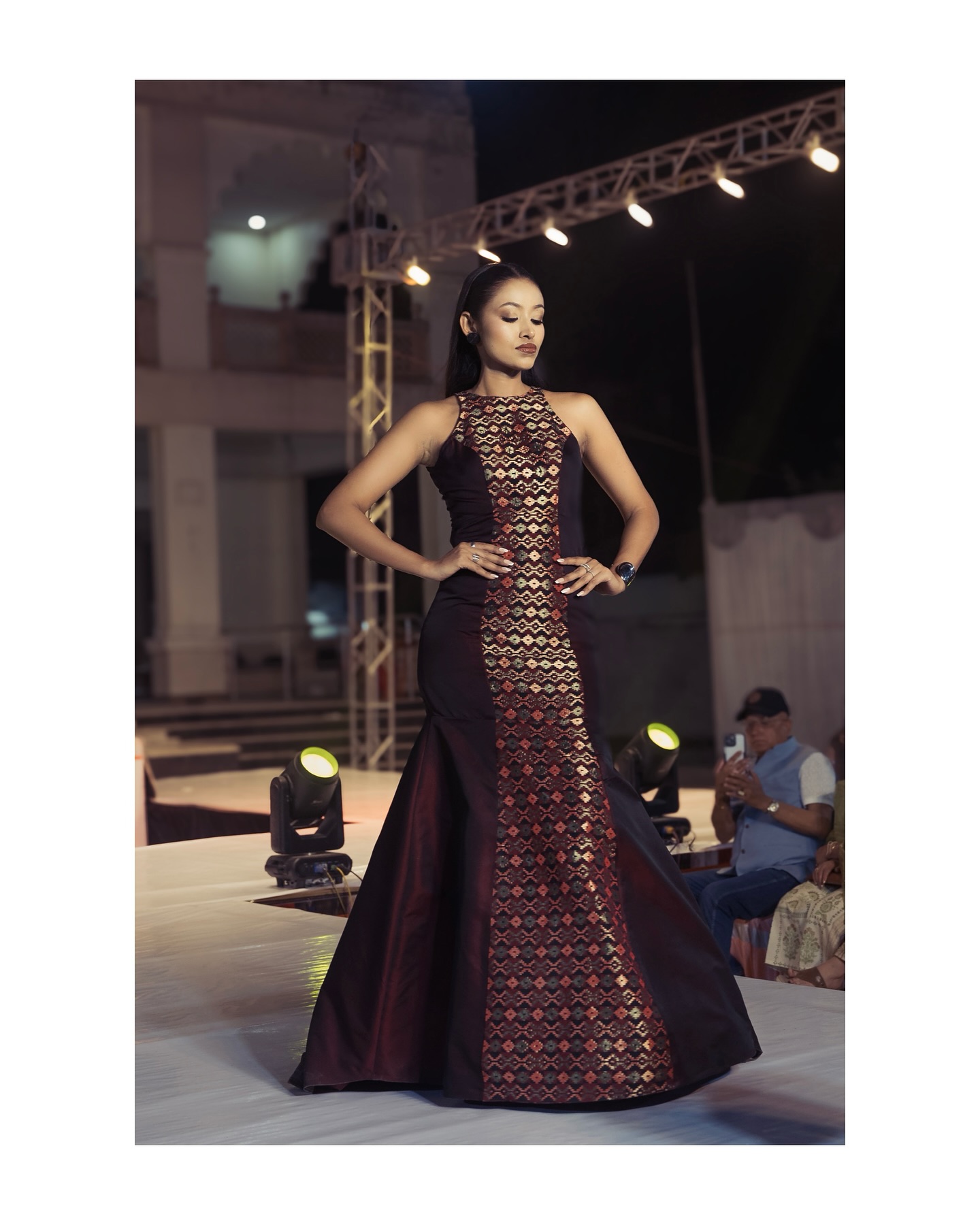
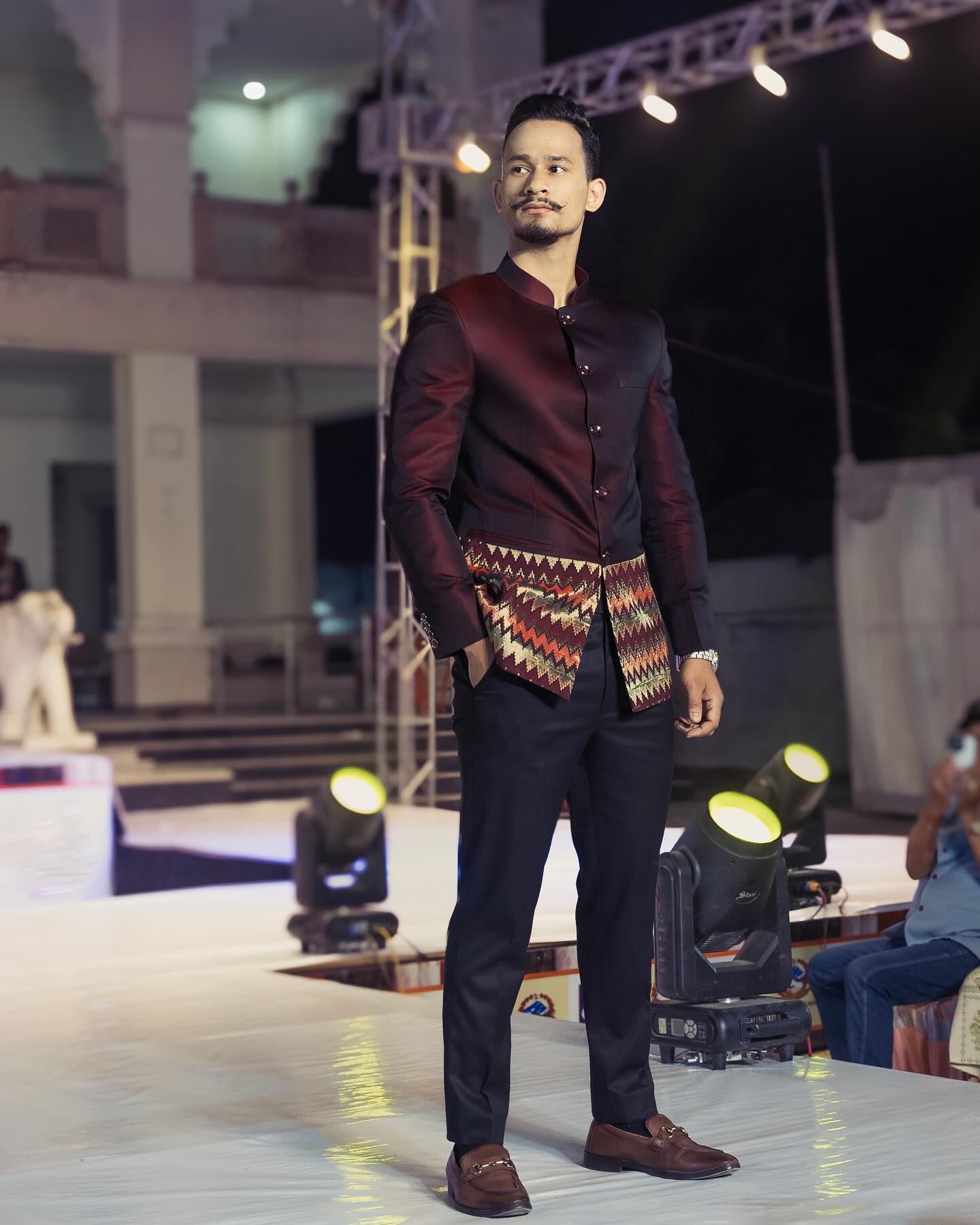
This is the era of Dhaka fusion — and it is not about diluting tradition, but expanding it. College students pair Dhaka cholis with casual pants and sneakers; businesswomen incorporate Dhaka into tailored blazers, formal trousers, and elegant jumpsuits.
Globally, Nepali Dhaka weavers are finding markets in the USA, India, UK, and beyond. Brands like Dochaa have woven Dhaka into footwear, while Aura Que uses it for evening clutches and purses.
Styling with Dhaka: Outfit Ideas
The Dhaka Saree
Perhaps the most iconic expression of the fabric — handwoven with intricate patterns and bright colors. It's a favorite for festivals and weddings.
- Pair with a contrasting plain silk blouse for a classic look.
- Wear with a modern crop top blouse in a neutral tone for a fusion feel.
- Accessorize with gold pote necklace, jhumka earrings, and bangles.
The Dhaka Blouse / Choli
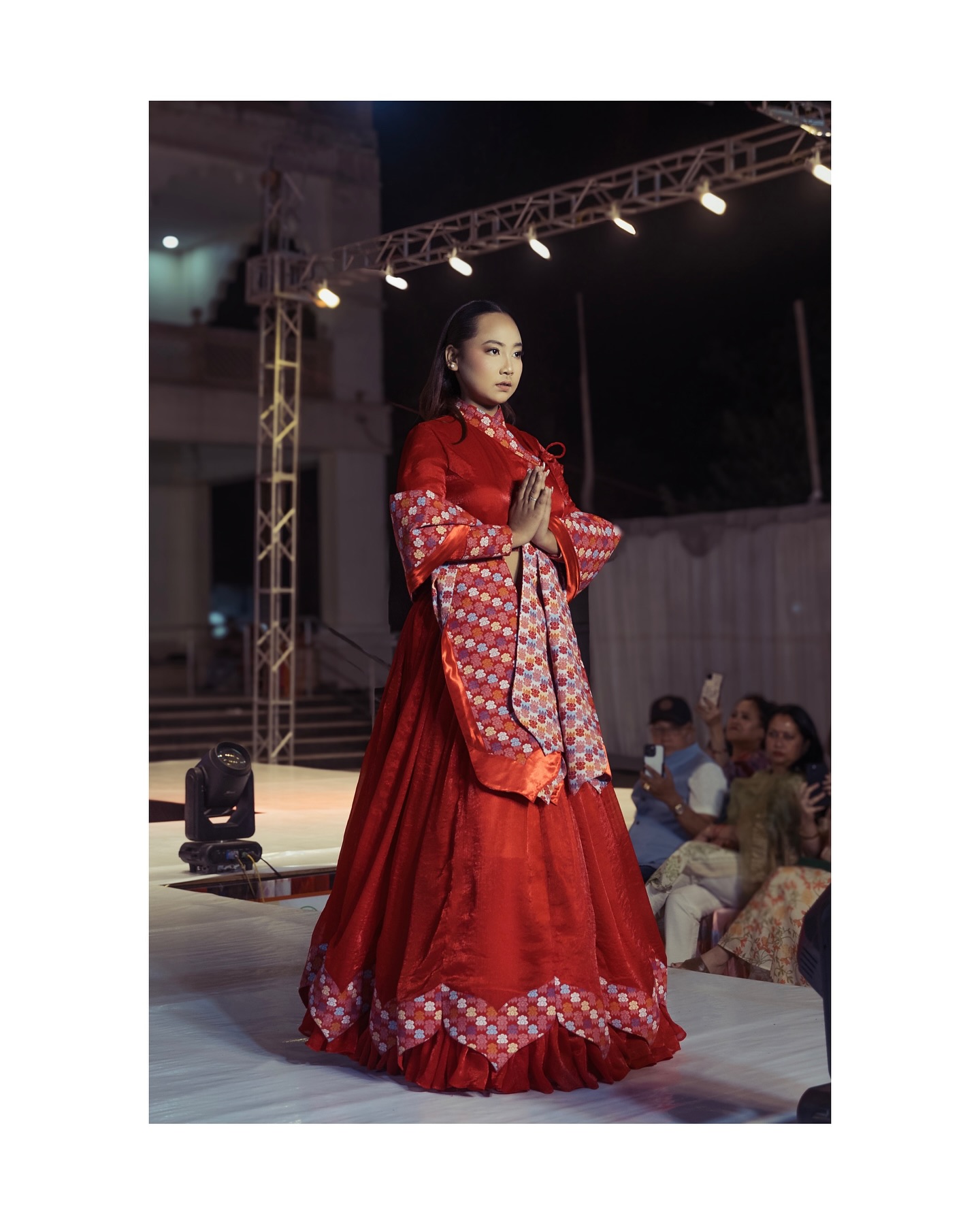
Fitted snugly, often with a high neckline and embroidery, it is both traditional and striking. The Chaubandi Cholo has been reimagined into jumpsuits and corset tops.
- Fusion: Pair a Dhaka choli with wide-leg trousers or a midi skirt.
- Street Style: Chaubandi Cholo with jeans for an effortlessly culture-forward look.
The Dhaka Coat & Jacket
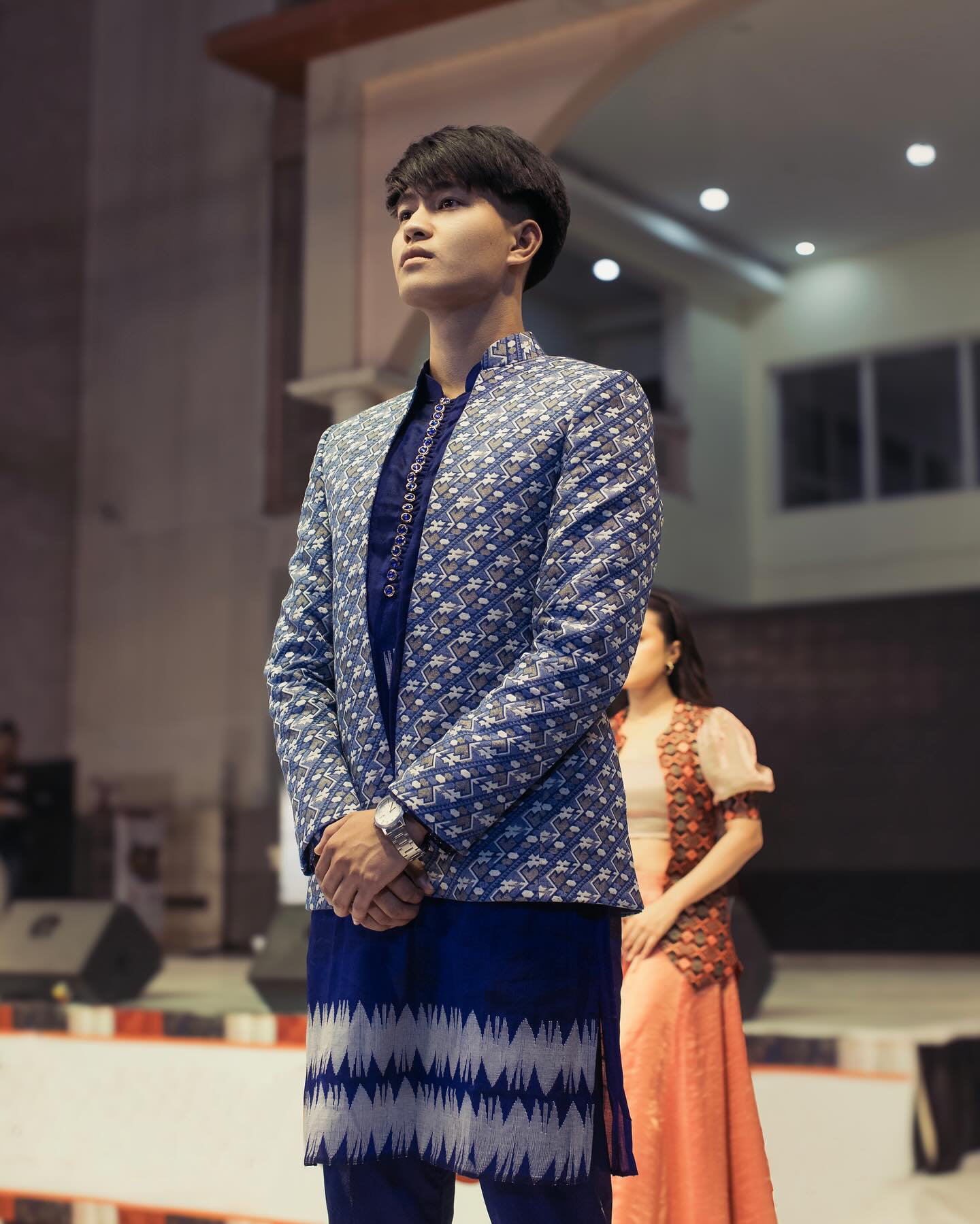
One of the most exciting fusion trends is the emergence of Dhaka tailored coats and blazers. These take the fabric out of its traditional context and place it into structured silhouettes.
Dhaka on the Runway: Mohatsav 2081
Biratnagar recently hosted Dhaka Mohatsav 2081, a runway event showcasing creative designers. Among those who took the spotlight was Maya Boutique, whose collection drew attention for the way it moved Dhaka into contemporary, wearable silhouettes. Bridal drapes, fusion sarees, and structured ethnic pieces showcased just how far the fabric can travel when the right hands guide it.